Discovering Ernest Hemingway’s Masterpiece: A Closer Look at “An Alpine Idyll”
Few authors can encapsulate the profound depths of life’s complexities within the brevity of a short story quite like Ernest Hemingway, and “An Alpine Idyll” is no exception. Originally published in Hemingway’s acclaimed 1927 collection Men Without Women, this short story is a deceptively simple tale brimming with layered meaning.
Set amid the pristine yet desolate beauty of the Alpine mountains, Hemingway weaves a narrative that is equal parts haunting and introspective. It follows two men returning from a skiing trip who stumble across a small mountain village, where they encounter a innkeeper, learn of his wife’s death, and are drawn into the quiet desolation of his way of life.
In true Hemingway fashion, the story reveals as much in what is left unsaid as in the words themselves, leaving readers to grapple with its stark realism and moral undertones. Revered as one of the gems of 20th-century literature, “An Alpine Idyll” continues to captivate audiences with its unflinching view of human nature.
About the Author
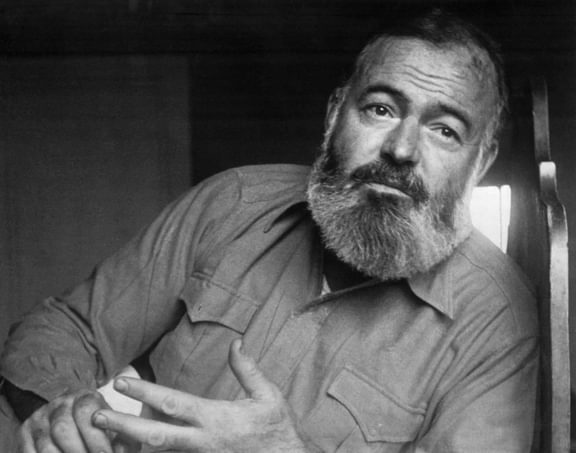
Ernest Hemingway remains one of the most iconic literary figures in history, known for his sparse, unadorned prose that revolutionised modern storytelling. Born in Oak Park, Illinois, in 1899, Hemingway lived an adventurous life that took him from the tumult of World War I to the serene coasts of Key West, Cuba, and beyond.
Hemingway’s trademark writing style—simple yet profound—reflects his philosophy of writing “one true sentence.” His works are defined by their discipline and precision, designed to evoke maximum emotional impact through minimalistic language. Drawing from his own experiences as a journalist, soldier, and traveler, Hemingway often explores themes of masculinity, isolation, and the human spirit.
Before "An Alpine Idyll," Hemingway had already made waves with In Our Time and garnered international acclaim with The Sun Also Rises. With "Men Without Women" and its collection of short stories, he proved himself to be a master of the form. What makes Hemingway unique isn’t just his words but the silences between them—the unspoken truths, the depth concealed under each iceberg-like surface.
Story Discovery
At its core, “An Alpine Idyll” juxtaposes the beauty of the tangible—snow-covered mountains and blue skies—with the ugliness of human detachment and hardship. The story begins with two friends descending from a lone ski trip in the Alps, stopping at a small village where solemnity looms. The innkeeper shares that his wife has passed away. But as the details of her death unfold, the seemingly idyllic life they witness takes on darker undertones.
Hemingway turns this remote Alpine setting into a quiet theatre for human complexity. The innkeeper’s stoic demeanour masks something deeper. Through dialogue and sparse narrative description, the mundanity of life in the Alps becomes a moving story of grief, duty, and alienation without ever lapsing into melodrama or sentimentality.
Themes That Strike a Chord
“An Alpine Idyll” is a story about contrasts—mountain stillness against moral unease, beauty against blunt reality. Among Hemingway’s many motifs, the theme of human detachment stands out starkly in this tale. The stoicism of the innkeeper, paired with the unceremonious treatment of his wife in death, brings an ethical depth to the fore. Morality as it relates to routine, tradition, and duty is quietly examined. Readers are left to ponder: How much of what we call “tradition” is merely a way to cope with isolation and toil?
Hemingway also delves into themes of grief and burden in a subtle yet compelling way. The story asks us to confront the differences in how we process losses, big and small, and how our environments shape us. It captures the desolate beauty of inhabiting a space where nature both nurtures and isolates the people within it.
Hemingway’s Genius Unveiled
At first glance, Hemingway’s sparse writing style appears deceptively straightforward. But under the surface, it masterfully echoes the isolation felt by the characters in “An Alpine Idyll.” Hemingway employs his celebrated “Iceberg Theory,” where the true depth of the story remains submerged beneath the visible words on the page.
Dialogue plays a central role in this story. The conversations reveal the characters’ unspoken fears and desires, especially the detached discussions between the skiers and the innkeeper. Careful readers will notice that what characters leave unsaid often says more than their actual dialogue.
Hemingway also uses setting as an extension of the central theme. The Alps are described beautifully, but this beauty only serves to heighten the moral ambiguity and monotony of the innkeeper’s life. Using a minimalist approach, Hemingway avoids unnecessary adjectives or elaborate descriptions, allowing the reader to infer meaning and emotion through action and implication.
A Story That Endures
Though “An Alpine Idyll” isn’t as widely recognised as The Old Man and the Sea or A Farewell to Arms, it remains one of Hemingway’s poignant masterpieces in the short story genre. Critics have praised its restraint and subtlety, qualities that distinguish it from more sprawling narratives.
Readers gravitate toward Hemingway’s ability to expose the rawness of humanity with unflinching authenticity. Ernest Hemingway’s nuanced power to balance vivid imagery and thematic weight makes the story memorable.
The story’s themes and cinematic setting lend themselves to timeless interpretation, leaving audiences in modern times just as engaged as they were at its publication nearly a century ago.
“An Alpine Idyll” is proof of Hemingway’s brilliance in blending simplicity with depth, creating stories that resonate on both personal and universal levels. Through its exploration of tradition, loss, and the stark moral dilemmas of rural life, the story captures the delicate interplay of beauty and humanity.
This quiet tale, nestled in the Alpine snow, offers an evocative journey that unfolds with every careful read. Whether you’re a seasoned Hemingway enthusiast or just beginning to explore his work, this short story is a brilliant place to experience the art of saying more with less.
If this story piqued your interest, there’s an entire world of Hemingway’s short stories waiting to be explored. Much like “An Alpine Idyll,” his works endure as timeless pieces of art that reflect the raw truths of life. Happy reading!
Other posts
Unlocking Immortality: A Closer Look at How to Live to be 200 by Stephen Leacock
Dive into Stephen Leacock's hilarious short story and his witty take on life advice, blending satire and humour to reflect on human ambition.
Breaking the Chains: A Deep Dive into Frigyes Karinthy’s Masterful Short Story “Chains”
Explore “Chains” by Frigyes Karinthy, a gripping short story exploring connection and fate, written by one of Hungary’s most inventive literary minds.

Unveiling the Abyss: Exploring "From Beyond" by H.P. Lovecraft – A Tale of Hidden Realities
Discover H.P. Lovecraft's "From Beyond," a chilling tale of unseen dimensions and the horrors they reveal, showcasing his unparalleled imagination.