Unveiling the Abyss: Exploring "From Beyond" by H.P. Lovecraft – A Tale of Hidden Realities
Imagine a device that can alter your perception, open your eyes to an unseen world, and unveil dimensions far beyond human comprehension. H.P. Lovecraft’s short story From Beyond catapults readers into this terrifying premise, blending cosmic horror with the fragility of the human mind. Originally published in The Fantasy Fan magazine in 1934, From Beyond remains one of Lovecraft’s most enigmatic tales. Though a brief read, the story’s chilling exploration of what lies beyond our reality has inspired countless adaptations, from films to video games. It’s a story that leaves you questioning the thin veil between the reality we know and the abyss that lurks just beyond.
But what makes Lovecraft and this particular story so timeless? Let’s delve deep into the writer, his hauntingly brilliant narrative style, and the mind-bending themes that make From Beyond an essential read for horror and science fiction enthusiasts alike.
About the Author
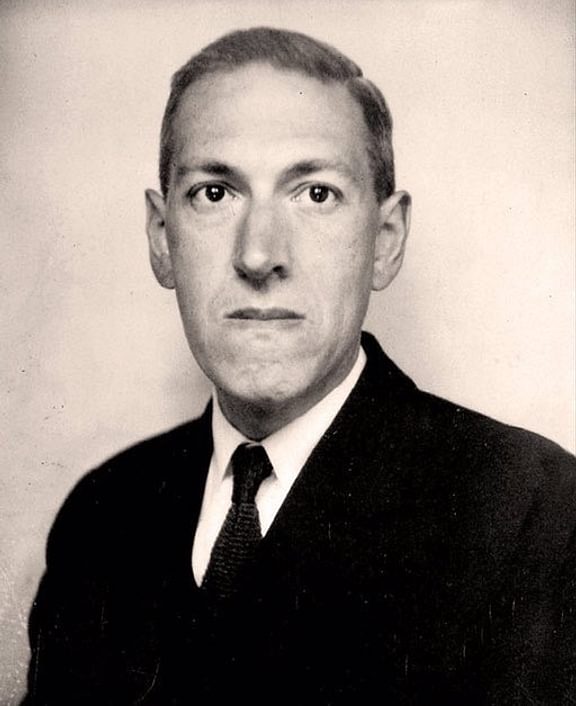
H.P. Lovecraft is synonymous with cosmic horror—a genre that taps into the vast, unsettling unknown and humanity’s insignificance in the universe. Born in 1890 in Providence, Rhode Island, Lovecraft’s life was fraught with struggles, but his imagination knew no bounds. His works, most of which were published in pulp magazines during his lifetime, were underappreciated when he was alive. However, Lovecraft laid the foundation for modern horror, influencing heavyweights like Stephen King and Guillermo del Toro.
What makes Lovecraft’s storytelling so unique is his ability to evoke fear of the intangible. Rather than showing monsters outright, he rooted his dread in the unseen and incomprehensible. In From Beyond, we find this hallmark style in full force. Lovecraft builds a world where curiosity can lead to revelations so horrifying, they shatter the fabric of sanity.
Story Discovery
Set in an unnamed city, From Beyond is narrated by an unnamed protagonist who recounts his chilling encounter with Crawford Tillinghast, an eccentric scientist and former friend. Tillinghast invites the narrator to witness the results of his experiment—a machine that stimulates the pineal gland, enabling humans to perceive creatures and dimensions that are invisible under normal circumstances.
As the machine is activated, the veil between dimensions lifts, and the narrator experiences unspeakable horrors. Indescribable entities inhabit this newfound reality, existing in grotesque forms beyond human comprehension. As Tillinghast gloats over his discovery, the narrator grapples with the overwhelming terror of what is revealed, leading to a harrowing conclusion that demonstrates the price of meddling with forces beyond our understanding.
In fewer than 3,000 words, Lovecraft delivers an unforgettable punch—one that leaves readers questioning the true nature of reality.
At its core, From Beyond encapsulates one of Lovecraft’s central philosophical ideas: the insignificance of humanity in the face of a vast, incomprehensible universe. The story warns against the dangers of hubris and blind curiosity. Crawford Tillinghast’s relentless pursuit of knowledge uncovers truths that are better left hidden, bringing devastation upon himself and those around him.
In addition to cosmic horror, the story touches on themes of madness, scientific ethics, and the fragility of human perception. Can humans truly handle the knowledge of what exists beyond? Lovecraft suggests that such enlightenment comes at a steep price—the loss of sanity and the rupture of everything we hold as real. These themes remain strikingly relevant, particularly in today’s age of rapid scientific advancement and existential inquiry.
Lovecraft’s distinctive writing style shines in From Beyond. His prose is rich, dense, and steeped in atmosphere. One of the most notable techniques in this story is Lovecraft’s use of negative space—he deliberately avoids describing the creatures and dimensions in full detail, leaving much to the imagination. For instance, he writes, “They were creatures of a form which only a diseased fancy could conceive.” This vagueness heightens the terror, as readers are forced to fill in the blanks with their darkest thoughts.
Another fascinating aspect of the story is its first-person narration. The unnamed protagonist acts as a stand-in for the reader, experiencing the horrors alongside us. The juxtaposition between the initially skeptical narrator and Tillinghast’s unhinged mania creates a tension that drives the story forward. Lovecraft expertly intertwines psychological horror with the grotesque, keeping readers on edge until the final, devastating line.
Though Lovecraft found little commercial success or recognition in his lifetime, his work has since become a cornerstone of speculative fiction. From Beyond has been celebrated for its innovative exploration of alternate dimensions and its ability to invoke fear of the unknown. The story has been adapted into a cult-classic horror film in 1986, as well as video games and even tabletop RPGs. These adaptations highlight the timeless appeal of the story and its relevance to modern audiences.
Critics and fans alike praise From Beyond for its uncanny ability to make readers reconsider their understanding of reality. As one reader exclaimed in an online review, “Lovecraft’s From Beyond doesn’t just tell a story—it drags you into the abyss and leaves you trembling.”
If you haven’t yet experienced the eerie brilliance of From Beyond, now is the time. H.P. Lovecraft’s masterful storytelling, rich themes, and chilling exploration of the unknown make this short story a standout in the world of horror fiction. Whether you’re a longtime fan of Lovecraft or a newcomer to his work, From Beyond is a perfect entry point into his universe of cosmic terror.
To fully grasp Lovecraft’s genius, step into the shoes of his protagonist, and activate the machine. The journey may leave you questioning reality—but isn’t that the hallmark of great storytelling?
Discover From Beyond and other chilling tales by H.P. Lovecraft today. Are you ready to explore the dimensions that lie hidden... just beyond?
Other posts

Discovering Ernest Hemingway’s Masterpiece: A Closer Look at “An Alpine Idyll”
Step into the world of Ernest Hemingway with “An Alpine Idyll,” as we explore his exceptional storytelling, evocative themes, and timeless writing style.

Unlocking Immortality: A Closer Look at How to Live to be 200 by Stephen Leacock
Dive into Stephen Leacock's hilarious short story and his witty take on life advice, blending satire and humour to reflect on human ambition.
Breaking the Chains: A Deep Dive into Frigyes Karinthy’s Masterful Short Story “Chains”
Explore “Chains” by Frigyes Karinthy, a gripping short story exploring connection and fate, written by one of Hungary’s most inventive literary minds.