10 Things You Might Not Know About J.D. Salinger
At the age of 32, J.D. Salinger penned "The Catcher in the Rye," solidifying his position in literary history. With sales exceeding 65 million copies to date, this novel remains his sole published work, complemented by three collections of short stories. Throughout his lifetime, Salinger, creator of the groundbreaking and provocatively rebellious character Holden Caulfield, was shrouded in public speculation due to his reclusive nature, which fuelled the myths surrounding him. As we celebrate his remarkable life, here are ten intriguing facts about this enigmatic author that you may not be aware of.
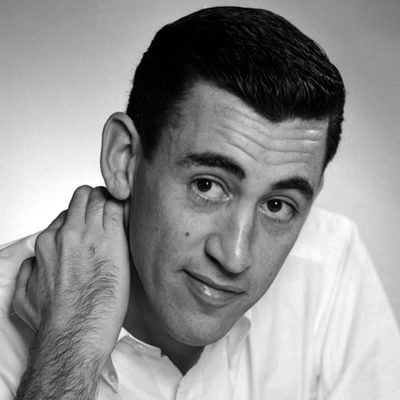
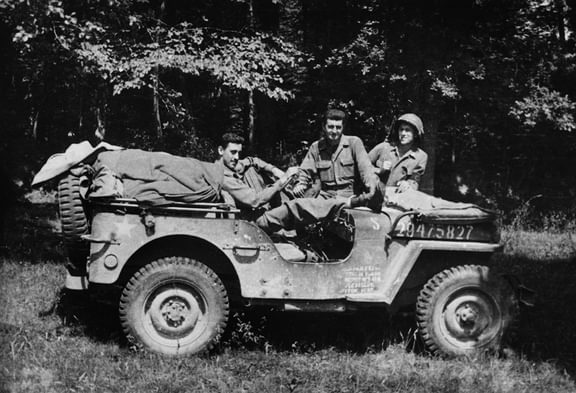
Salinger, Jack Altaras, John Keenan, and Paul Fitzgerald.
1. Salinger served in the US Army during WWII and was involved in the invasion of Normandy in 1944. He is alleged to have carried six chapters of The Catcher in the Rye with him when he landed on Utah Beach on D-Day.
2. Salinger explored and studied a number of religions during his lifetime, including Zen Buddhism, Hinduism, Christian Science and Scientology.
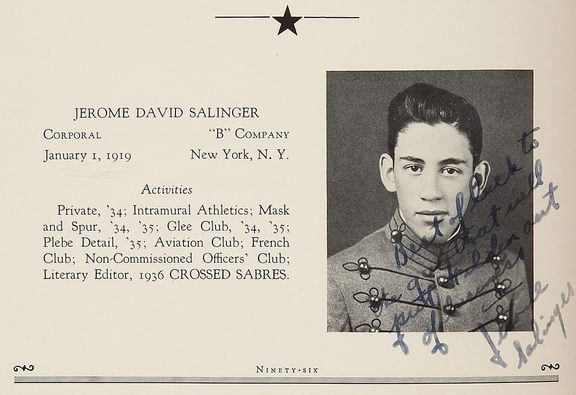
J.D. Salinger in the 1936 Valley Forge Military Academy year.
3. He was a keen actor at school, displaying a much greater interest in acting than writing. In his yearbook, he signed with the names of the characters he had played.
4. The Catcher in the Rye is one of the most frequently banned books of the past 50 years, due to Holden Caulfield’s perpetual swearing and candid discussion of sex.
5. Many know that Mark David Chapman, John Lennon's assassin, was obsessed with The Catcher in the Rye. He once said in a statement, “The reason I killed John Lennon was to promote the reading of J. D. Salinger’s Catcher in the Rye”. But did you know that police found a copy of the novel in John Hinckley Jr’s apartment after he shot Ronald Reagan in 1981? While in 1989, Robert John Bardo murdered actress Rebecca Schaeffer and was found to be carrying a copy of the book when he was arrested.
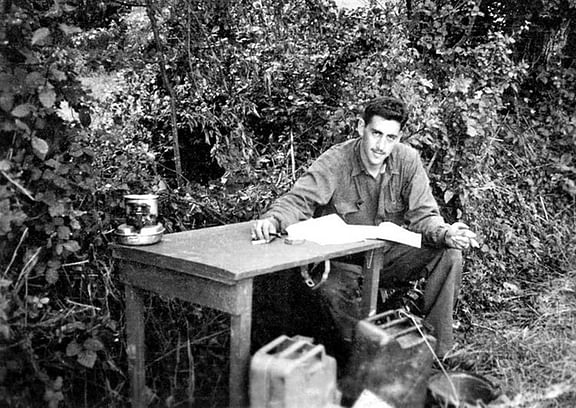
Still from "Salinger", 1913 – the author writing The Catcher.
6. While Holden Caulfield speaks poorly of Ernest Hemingway’s A Farewell to Arms, Salinger actually maintained a personal correspondence with Hemingway and the two held a mutual respect for one another.
7. Similarly Caulfield declared that he hated the movies, but Salinger was in fact a film fanatic, his favourites including The Thirty-Nine Steps, The Thin Man, The Lady Vanishes, Lost Horizon and The Pink Panther. Salinger's other hobbies included listening to the Three Tenors-Jose Carreras was his favourite; watching tennis-he admired John McEnroe and Tim Henman; and eating Burger King hamburgers, which he once noted were better than those from other chains.
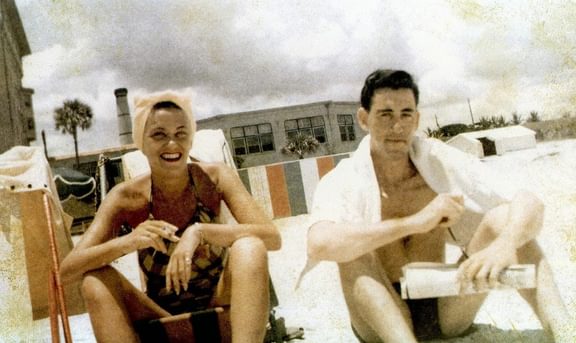
J.D. Salinger and his sister Doris in Florida.
8. Franny and Zooey was originally published as two separate stories in The New Yorker magazine. "Franny" appeared in the magazine in January 1955, and "Zooey" in May 1957. Salinger published "Franny and Zooey" together as a book in July 1961, dedicating the book to The New Yorker editor William Shawn.
9. Despite his reputation as a hermit, Salinger was more sociable than people gave him credit for-he was often seen out drinking with Vivien Leigh, for instance, and there are pictures of him on dates with Vogue models.
10. Salinger was a tough cookie. In her memoir, his daughter Margaret A. Salinger noted, "The only time I have ever seen my father cry in my whole life was the day he watched JFK’s funeral procession on television.”
Other posts
Discovering Ernest Hemingway’s Masterpiece: A Closer Look at “An Alpine Idyll”
Step into the world of Ernest Hemingway with “An Alpine Idyll,” as we explore his exceptional storytelling, evocative themes, and timeless writing style.
Unlocking Immortality: A Closer Look at How to Live to be 200 by Stephen Leacock
Dive into Stephen Leacock's hilarious short story and his witty take on life advice, blending satire and humour to reflect on human ambition.
Breaking the Chains: A Deep Dive into Frigyes Karinthy’s Masterful Short Story “Chains”
Explore “Chains” by Frigyes Karinthy, a gripping short story exploring connection and fate, written by one of Hungary’s most inventive literary minds.